Stemtree.com STEM Programs in Spring TX: A Multidisciplinary Approach
Spring is a place where families chase after curiosity with a map in one hand and a toolkit in the other. For parents watching their kids try to name the parts of a drone or decode a basic circuit, the landscape of STEM education can feel dizzying. There are camps, after-school offerings, weekend workshops, and private tutoring. Yet buried in the options is a quiet rhythm that resonates when learning sticks: a multidisciplinary cadence that treats science, technology, engineering, and math as a living conversation rather than four separate subjects. Stemtree of Spring TX embodies that rhythm, weaving disciplines together in a way that mirrors real-world problem solving. The result is not a collection of classes but a cohesive journey through the kinds of thinking kids will actually use in classrooms, on future job sites, and in daily life.
In Spring Texas, families often look for a program that respects both the pace of a growing mind and the demands of a practical, hands-on curriculum. Stemtree of Spring TX positions itself as exactly that kind of partner. It is not merely about teaching the alphabet of science or memorizing a set of formulas; it is about cultivating a way of approaching problems. Students learn to frame questions, test ideas, iterate on designs, and communicate their reasoning clearly. The approach rests on a few core beliefs about how kids learn and how long-term learning develops.
First, there is the insistence that knowledge is not a static stockpile but a dynamic toolkit. A physics concept learned in a vacuum becomes meaningful when it’s connected to a robotics project or a coding task. A math principle gains strength when it sits inside a real-world scenario, such as analyzing data from a sensors suite on a model vehicle. The advantage of this approach in Spring TX is that it matches the local ecosystem in which families live and operate. The community emphasizes practical outcomes, whether that means a budding engineer building a small mechanism for a school competition or a coder prototyping an app to address a local need. Stemtree’s programs speak to that reality by offering a spectrum of experiences that overlap and reinforce one another rather than existing in silos.
The second pillar is a respect for varied pathways. Not every child grows into a future scientist or engineer, and not every learner thrives by the same route. Stemtree’s breadth matters: it includes opportunities in science classes for kids that nurture curiosity about natural phenomena, but it also embraces engineering classes for kids, technology classes for kids, and even math tutoring that targets confidence and fluency. The aim is not to funnel students into a single track but to empower them to explore multiple avenues, to discover where their strengths lie, and to build transferable skills such as hypothesis testing, data interpretation, collaborative problem-solving, and precise communication.
The third pillar is the sense that good STEM education is collaborative education. Projects are not solo quests but shared endeavors that demand listening, negotiating, and refining ideas in light of new information. In practice, this translates to group design challenges, peer-to-peer feedback, and teacher scaffolding that shifts from direct instruction to guided inquiry as students grow more capable. In Spring, where families are busy and weekends get crowded, this model offers leverage: it makes efficient use of time by providing structured, purposeful sessions where students learn by doing together. The result is a community of learners who carry a sense of accountability for their own progress while supporting one another’s learning journeys.
To understand the value of Stemtree’s approach in Spring TX, it helps to ground the discussion in concrete experiences. Imagine a student who loves animals and wants to understand how technology can assist veterinary homeschool programs spring tx science. In a multidisciplinary pathway, that interest nudges into a project that blends biology, data analysis, and programming. The student might map out a plan to monitor environmental conditions in a terrarium, collect temperature and humidity readings, visualize the data, and then use a microcontroller to alert caregivers when conditions drift from an optimal range. This is not a magical shortcut; it is a practical exercise in modeling, measurement, and feedback. It teaches discipline in data collection, care in experimental design, and clarity in presenting findings. The student finishes with a portfolio-worthy project and a narrative about their process that can be shared with parents, teachers, or future mentors.
What sets Stemtree apart in Spring TX is the intentional alignment of program content with the educational and developmental needs of kids at different ages. The offerings are not a single monolith but a carefully curated ecosystem that accommodates entry-level curiosity as well as more advanced, project-driven exploration. For younger students, the emphasis might be on tactile exploration and foundational coding concepts. For middle-grade students, the focus shifts toward more structured experimentation, data collection, and the beginnings of engineering design. For older students, the path can widen into deeper technical projects, mentorship opportunities, and exposure to how STEM disciplines intersect with real-world problem solving. The goal is not to funnel every learner into a professional trajectory but to help each student articulate what they enjoy, where they struggle, and how to move from questions to informed, testable conclusions.
A practical way to view stem education through Stemtree’s lens is to consider the balance between guided instruction and independent inquiry. Guided instruction gives students a reliable map for navigating unfamiliar terrain—key vocabulary, standard procedures, and a scaffolded sequence that reduces cognitive load. Independent inquiry invites students to test hypotheses, troubleshoot equipment, and refine their plans based on outcomes. In the Spring TX context, where families often juggle school demands, sports, and community commitments, this balance matters. Students who benefit from structured guidance still gain the confidence that comes from making independent discoveries; those who crave more autonomy receive the opportunity to lead a project, manage timelines, and articulate their design choices.
The breadth of Stemtree’s offerings in Spring TX reflects that same belief in breadth without sacrificing depth. Programs span the spectrum from science classes for kids to more technical tracks in technology and engineering. The science tracks emphasize observation, hypothesis formation, and interpretation of data, all framed within hands-on experiments that illuminate core concepts in physics, chemistry, and biology. Engineering classes for kids push beyond the moment of discovery into the discipline of iterative design. Films or tabletop simulations rarely substitute for the tactile engagement that comes with building a device, wiring a circuit, or programming a microcontroller. This kinesthetic approach is especially valuable in a community like Spring where families often see the tangible payoff of a project—the sense of accomplishment that follows a successful build or a well explained result.
Technology classes for kids in this setting are not merely about learning the latest gadget or app; they are about understanding how technology shapes decisions and how to harness it responsibly. Students examine computing principles, learn to read and interpret code, and explore the implications of algorithmic thinking in everyday problems. They practice debugging as a normal part of creation, a habit that will serve them regardless of the path they choose later. The device-centric orientation is balanced with programming literacy that remains relevant even when students pivot to other domains of STEM.
Then there is the question of math tutoring within Stemtree’s ecosystem. Mathematics remains the language through which most STEM problems are accurately expressed and solved. The Spring TX programs approach math tutoring not as isolated practice but as a support for project work. Students see equations in action when modeling a real system, whether that is a simple physical simulation, a data-driven forecast, or the geometry involved in building a frame for a robot. The tutoring is targeted, often addressing specific gaps while aligning with ongoing projects so that practice translates directly into better performance on concrete tasks. This alignment reduces the disconnect students can feel when math feels abstract, reinforcing the sense that numbers exist to help them understand and shape the world around them.
A distinguishing feature of Stemtree in Spring TX is its responsiveness to community contexts. The programs are designed with the realities of local families in mind. Scheduling options tend to be flexible, with after-school sessions that fit between sports and coursework and weekend intensives for longer, more immersive projects. This flexibility matters because it lowers the barriers to participation for students who might otherwise miss out. When a family can choose between a Tuesday afternoon session and a Saturday workshop, they gain agency over their child’s learning, not a one-size-fits-all timetable. And when instructors understand the local ecosystem—from school calendars to community partnerships—camp experiences and class projects can reflect local interests, such as environmental stewardship, resilience planning, or technology access in the neighborhood.
The multidisciplinary nature of Stemtree’s approach shines brightest when you watch a cohort of students move from initial curiosity to a finished project that is both technically solid and thoughtfully communicated. It’s one thing to explain a circuit and another to present your design to peers with a clear narrative that demonstrates what you tested, what happened, and why you changed direction. In practice, students gain experience with the full lifecycle of a project: defining a goal, designing components, prototyping, testing, iterating, and presenting. The emphasis on process matters as much as the product because it mirrors the way professionals work in real laboratories and engineering ateliers. The capacity to articulate a design critique, to justify a chosen approach, and to reflect honestly on missteps becomes a portable skill that travels beyond the classroom.
Beyond the immediate classroom and workshop dynamics, there is a social texture to Stemtree’s programs in Spring TX. The sense of belonging a student experiences in a small cohort cannot be underestimated. Learning is amplified when peers encourage one another, when mentors share what they learned from a failed attempt, and when students feel safe enough to voice an uncertainty. This environment helps students build resilience—an essential trait in any STEM journey. It also fosters collaboration that carries over into school projects and, later, work environments where teamwork is often the decisive factor between a project’s success and its stagnation.
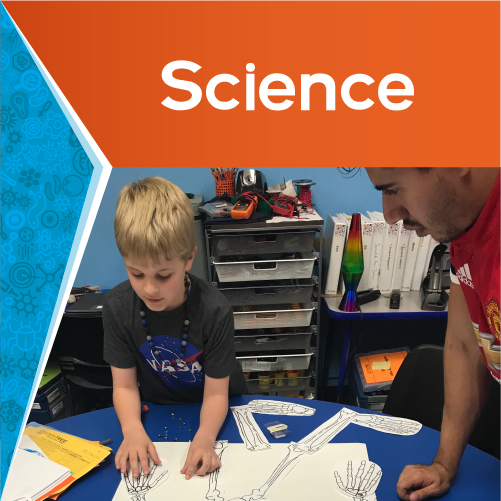
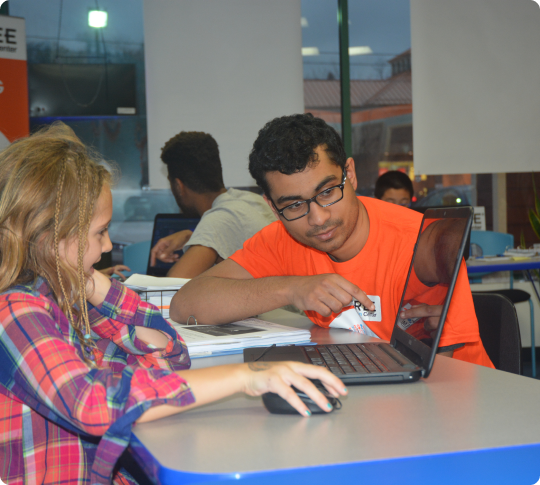
To get more concrete, consider the kinds of learning experiences a student might encounter across Stemtree’s offerings in Spring TX. In a science class for kids, a student might investigate the properties of different materials by conducting hands-on experiments and comparing results with a simple model. They learn to observe, measure, and record outcomes with accuracy, while also developing a sense of curiosity about why things behave the way they do. In an engineering class, the same student could transition into a design challenge that requires building a device to accomplish a specific task, such as lifting a weight or navigating an obstacle course, all while optimizing for speed, efficiency, and reliability. In a technology class, the student learns the fundamentals of coding and computational thinking, translating a concept into a functioning program that can control a hardware component or interpret data collected from a sensor network. Then, within math tutoring, the student hones problem-solving strategies and learns to translate real-world scenarios into formal mathematical expressions.
The breadth of these experiences matters not only for immediate project outcomes but for long-range curiosity. A child who discovers the thrill of code debugging may later become fascinated by data science. A student whose first robotics project reveals the elegance of a clean design might pursue mechanical engineering or industrial design. A young scientist who enjoys laboratory-style experimentation could explore bioengineering or environmental science. Stemtree’s Spring TX offerings nurture these possibilities without pressuring every learner into a predefined career path. The aim is to empower students to pursue their interests with confidence and to develop a robust toolkit that will serve them wherever their passions lead.
One practical way families navigate Stemtree’s multidisciplinary approach is through portfolio building. A well-curated portfolio of projects can become a compelling narrative for future teachers and mentors. Students can assemble photographs, diagrams, data plots, and written reflections that document their problem-solving journey. A robust portfolio demonstrates not only what a student built but how they approached challenges, how they handled setbacks, and how they communicated results. In Spring TX, where many students thrive in community networks, this kind of record also serves as a conversation starter with teachers who might help identify enrichment opportunities or competitions that align with the student’s evolving interests.
The economics of participation is another thread worth understanding. Programs in Spring TX can vary in cost, structure, and duration, and families often balance these factors against the perceived value of the learning experience. Stemtree’s multidisciplinary approach tends to deliver value through depth and integration rather than through superficial coverage of multiple topics. When a student engages in a single project across science, engineering, and coding, the return on time invested can be higher than attending three separate, unconnected modules. It is not simply about the number of hours spent learning; it is about the coherence of the learning journey and the growth in the student’s ability to connect dots across disciplines. As a result, families in Spring TX often report that the program pays dividends in terms of confidence, curiosity, and the ability to approach complex problems with a structured method.
Of course, no pathway is without its caveats. A multidisciplinary approach can feel dense to a student who is still finding their footing. The interplay between different disciplines demands a level of cognitive flexibility that not every learner has developed at the same pace. In practice, successful participation depends on attentive pacing, responsive instructors, and clear expectations about effort and reflection. Stemtree’s instructors in Spring TX typically balance enthusiasm with disciplined scaffolding, gradually increasing autonomy as students demonstrate readiness. For families, the key is to recognize when a student benefits from slower progression in a particular track or adjustable timeframes to avoid burnout. The ability to tune the schedule, pair projects with supportive tutoring, and emphasize quality over quantity helps maintain momentum while respecting the student’s limits.
What does a sample semester look like for a student in Spring TX who engages with Stemtree across multiple strands? A realistic arc might begin with an introductory science or math readiness module that helps consolidate foundational concepts and builds confidence. The student then enters a project-centric phase, where a single design challenge spans several weeks, integrating elements of physics, data analysis, programming, and presentation skills. Midway through the term, a companion engineering module adds a hardware dimension, encouraging hands-on prototyping and iterative testing. Late in the semester, a technology or coding unit reinforces software skills, perhaps culminating in a small application or a robot that demonstrates the student’s integrated understanding. The cycle emphasizes progression—easy wins early to build momentum, followed by increasingly complex tasks that require thoughtful planning, experimentation, and communication.
For families evaluating Stemtree in Spring TX, several signals tend to indicate a program aligned with strong multidisciplinary practice. Look for a curriculum that explicitly names cross-cutting skills—such as modeling, data literacy, system thinking, and collaborative communication—within each project. Ask about how instructors scaffold inquiry: how they move a student from a guided prompt to independent hypothesis formulation and how they structure feedback that is constructive rather than evaluative. Consider how student work is showcased. Does the program provide opportunities to present results to peers or a broader audience, such as families or community partners? Are there opportunities for mentorship or participation in local competitions that extend learning beyond the classroom? A program that answers these questions with concrete protocols and a supportive culture is typically investing in a durable, transferable STEM education.
The social and logistical fabric matters too. In Spring TX, a community-focused approach includes partnerships with local schools, makerspaces, and community centers. When a program anchors itself in the local environment, it can design projects that resonate with students’ lived experiences, whether that involves neighborhood infrastructure, environmental stewardship, or local technology initiatives. The most successful offerings schedule around school calendars and family routines, provide clear transport options when needed, and maintain consistent teacher teams who know the students well enough to tailor challenges without losing the overarching program architecture. Families often appreciate when teachers and coordinators maintain open lines of communication, offering progress updates that describe not just what a student did but how their thinking evolved during the process.
Ultimately, the choice to enroll in Stemtree programs in Spring TX rests on a synthesis of curiosity, practicality, and long-term goals. The multidisciplinary design is both a compass and a toolkit, guiding students as they navigate a world where problems do not respect disciplinary walls. It is an approach built on the understanding that children learn best when they see how ideas connect—when a circuit completion inspires a question about energy efficiency, or when a data visualization raises new questions about measurement reliability. The aim is not to produce memorized answers but to cultivate flexible thinkers who can collaborate, adapt, and persevere in the face of complexity.
To close with a sense of what makes this model work in a real community, consider a simple but telling vignette. A group of middle school students is tasked with creating an affordable weather station that can be deployed in a local park. The challenge begins with a science inquiry about how temperature, humidity, and wind affect plant growth. Students sketch a plan, assign roles, and decide how to measure each variable. They then design a circuit to power sensors and a microcontroller to log data. They write a short program to plot the data on a website so that park staff can see trends over time. Throughout the process, they practice communication by drafting a public-facing report that explains their methods in plain language and includes visuals. At the end of the project, they present their findings to classmates and instructors, answer questions, and propose improvements for future iterations. The sense of accomplishment is not tied to a single outcome but to a process that they can repeat, refine, and carry forward into future projects.
In the end, Stemtree of Spring TX offers more than a catalog of classes. It provides a scaffold for curious minds to explore, a community where collaboration matters, and a pathway that respects the complexity of real-world problems. The programs are designed not only to teach facts but to cultivate a way of thinking about the world—one that embraces inquiry, designs with intention, and communicates with clarity. For families in Spring, that is a rare alignment: a credible, hands-on, multidisciplinary STEM education that respects the pace of a child’s growth while preparing them to contribute meaningfully to the world around them.
If you are weighing options for your child, consider how a Stemtree experience could weave together the threads of science, technology, engineering, and math into a single, coherent fabric. Ask about the sequencing of projects, the balance between guided and autonomous work, and the ways in which instructors help students translate discovery into skill. Listen for stories from other families about projects that sparked confidence, or about late-night conversations sparked by a data set or a design flaw that taught resilience. The right program will not pretend to have all the answers but will demonstrate a clear commitment to helping learners ask better questions and pursue better solutions.
Two practical considerations can help you decide whether Stemtree’s approach aligns with your child’s needs and your family’s rhythm. First, inspect the project portfolio options and the frequency of showcase events. A vibrant program will offer multiple opportunities for students to share their work with peers, mentors, and the broader community, which reinforces the learning and validates the time invested. Second, ask about transition pathways. If a student completes a project in one discipline, is there a natural entry point to explore related areas in the next term without losing momentum? A program that provides smooth transitions signals a mature understanding of how multidisciplinary STEM education unfolds over time.
In Spring TX, where the pace of life is brisk and the culture values practical impact, Stemtree’s multidisciplinary framework can feel like a breath of clarity. It invites students to connect ideas across science, engineering, technology, and math in a way that mirrors how professionals work and think. It invites families to participate in a learning journey that is as much about habits of mind as it is about specific skills. The result is a schooling experience that feels both grounded and expansive, one that respects the curiosity of youth while equipping it with the tools to turn that curiosity into durable capability.
If you are considering Stemtree of Spring TX for your child, you are likely weighing not only the content of the curriculum but also the kind of learning environment you want to cultivate at home and at school. This approach prioritizes depth of understanding, iterative practice, and collaborative growth. It treats failure not as a dead end but as a data point to help recalibrate a plan. It emphasizes communication—from the first sketch to the final presentation—as a core skill, because the most important technology in any STEM field is the ability to explain your thinking clearly and convincingly.
Ultimately, the value of Stemtree in Spring TX is that it offers a coherent, ambitious, and humane way to learn. It respects the complexity of real-world problems and the diverse ways students may be drawn to STEM. It creates a space where curiosity can deepen into competence, and where competence can nurture broader confidence—confidence in asking questions, testing ideas, and sharing results with honesty and rigor. For families who want more than a checklist of topics and more than a series of disconnected activities, Stemtree presents a pathway that is as integrative as the problems students will eventually face in college, in careers, and in life.
Two quick takeaways for families reading this with an eye toward Spring TX reality:
- Multidisciplinary projects matter because they show how ideas from science, engineering, technology, and math intersect in the real world, helping students see the relevance of what they learn every day.
- A well-structured program that values process, portfolio development, and community exhibitions can create a durable foundation for long-term growth, not just short-term wins.
For families who want to see what this looks like in practice, the best next step is to connect with local Stemtree instructors to tour a session or observe a project briefing. Observe how students approach a problem, how instructors guide rather than tell, and how peers interact with one another. Look for a culture of curiosity where questions are welcomed and every student feels capable of contributing. If this resonance holds, you will likely find that the journey through Stemtree’s Spring TX offerings becomes more than a sequence of classes. It becomes a shared enterprise in which children, families, and mentors co-create a schooling experience that feels meaningful today and seriously valuable tomorrow.